
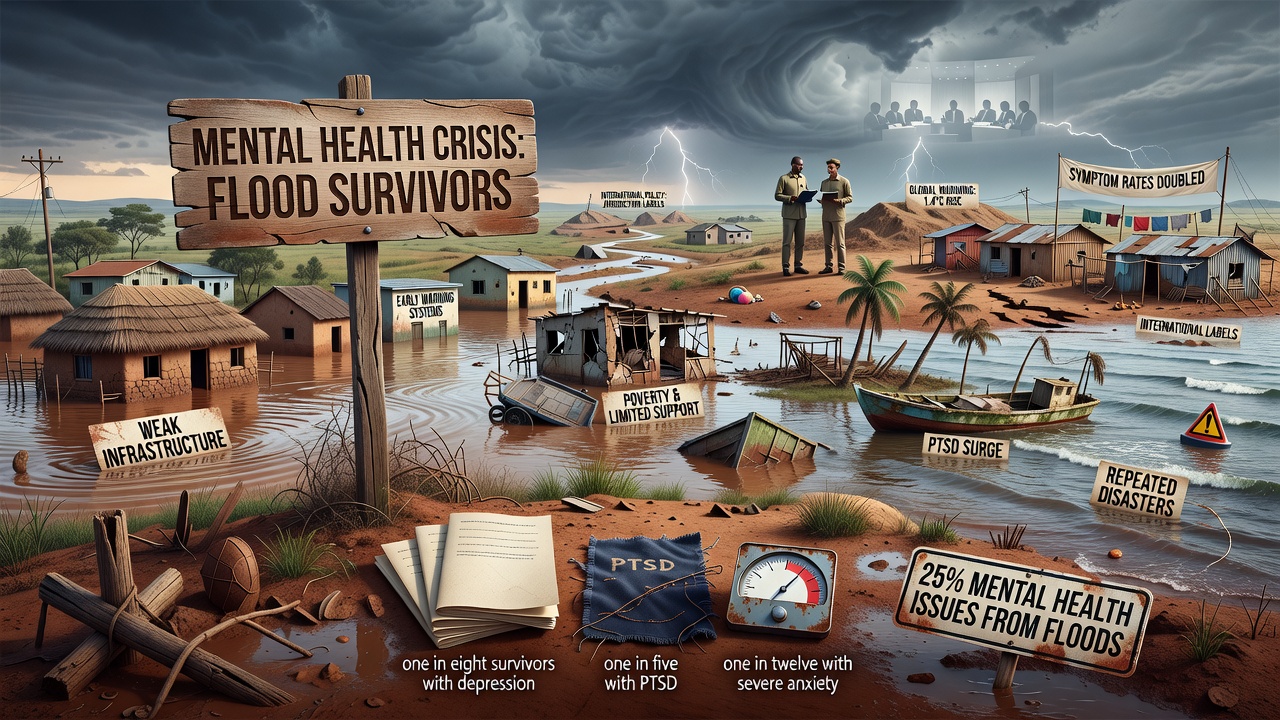
A new study tracking more than 5,300 people in Burkina Faso, Kenya, Mozambique and South Africa finds that flood survivors are substantially more likely to show signs of anxiety, depression and post-traumatic stress disorder than people who were not exposed to flooding. Researchers say the findings fill a major gap, since the psychological toll of floods has been poorly documented across Africa despite roughly half the continent's 54 countries experiencing extreme rainfall in 2024.
What the data shows
Across the four countries combined, about a quarter of mental health problems recorded among participants were attributable to flood exposure - meaning that if the floods had not occurred, 25% fewer people would have developed symptoms. One in 12 flood survivors showed signs of serious anxiety, one in eight had symptoms consistent with depression, and one in five displayed patterns resembling PTSD. In South Africa, the share of flood survivors with mental health symptoms was more than double that of non-flooded participants, with the attributable share closer to a third.
The pattern varied by country. In Mozambique, PTSD symptoms were rare - under 1% - among people who had not experienced a flood, but roughly 55 times more common among survivors. In Kenya, PTSD symptoms were already common in the non-flooded group (about three in ten people), rising to just over four in ten among survivors - a smaller relative jump despite higher overall rates.
Why the effects compound
Researchers involved in the project, including epidemiologist Collins Iwuji and psychiatry specialist Vasco Cumbe, say floods add another layer of stress on top of existing hardship - poverty, weak infrastructure and limited social support. Repeated disasters before communities can rebuild housing, roads or clinics appear to deepen psychological strain. Cumbe notes that emergency responses typically prioritize food, water and shelter, while mental health needs are frequently overlooked both in immediate relief and in disaster preparedness planning.
Young people appeared particularly affected, showing higher anxiety and PTSD levels than older age groups, even though baseline rates among non-flooded youth were similar to those of older adults. With an estimated two specialized mental health workers per 100,000 people across the continent, researchers warn that unmet psychological needs could translate into longer-term health and economic costs.
Policy and climate context
Scientists link the rising frequency of extreme rainfall to continued global warming - global air temperatures in 2025 were about 1.4°C above pre-industrial levels. Researchers say near-term protective measures include early flood warnings, evacuation planning and basic infrastructure maintenance such as clearing drainage systems. Longer term, limiting further warming under international frameworks like the Paris Agreement remains central to reducing flood severity. Building climate-resilient health systems is expected to be formally discussed for the first time at the COP31 UN climate conference in Turkey this November, though outcomes remain to be seen.