
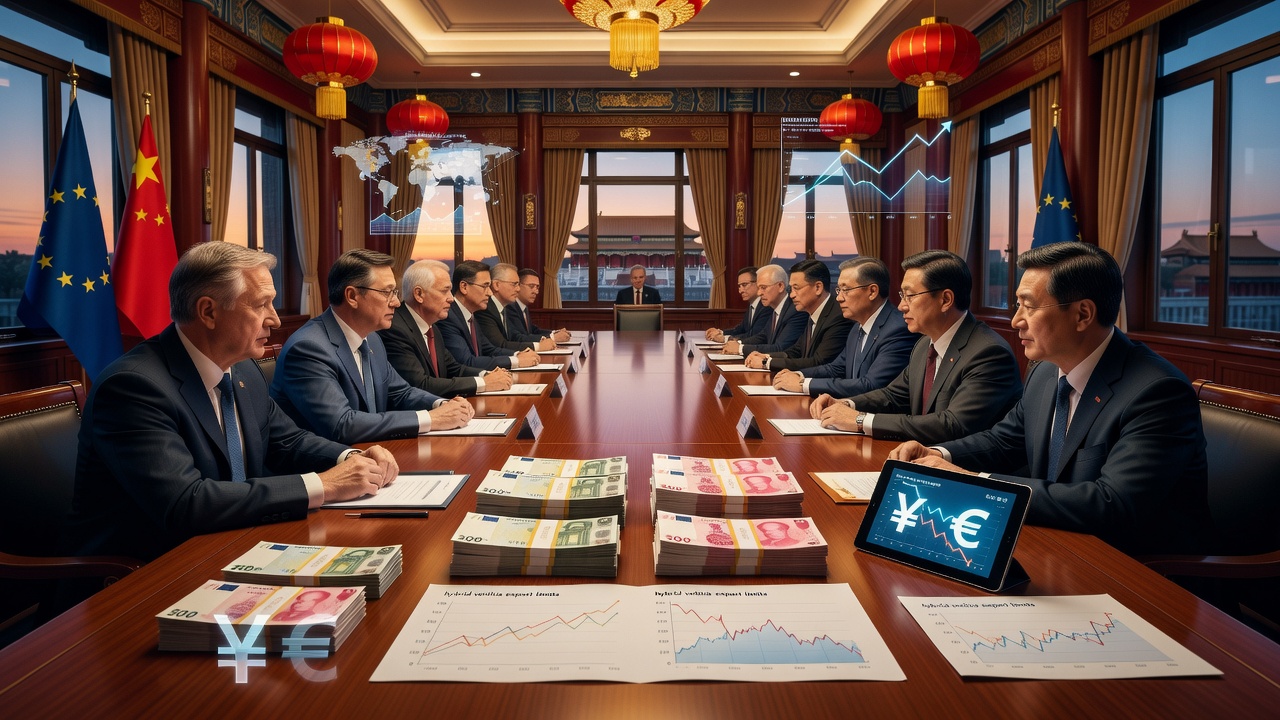
European Union officials are preparing a series of high-level visits to Beijing in the coming months, shifting focus from trade quotas to a thornier issue: the value of China's currency. The push follows an earlier agreement in which Beijing accepted limits on its hybrid vehicle exports to the bloc.
What is planned
According to people familiar with the planning, EU economy officials led by director general Maarten Verwey will meet Chinese counterparts in Beijing during the week of November 23 for what is described as a "macroeconomic dialogue." Separately, representatives from the European Central Bank, the Eurogroup and the European Commission are expected to travel to Beijing around the turn of the year, though no final date has been confirmed.
Why currency policy matters to the EU
European officials argue that if China manages its currency to keep it weaker than market conditions would otherwise dictate, Chinese exports become more price-competitive in European markets, putting pressure on EU manufacturers already contending with slower growth and rising import competition. This is a separate and, by most accounts, more complex issue than the hybrid car export cap, since currency valuation involves broader monetary and trade dynamics rather than a single product category.
Context and limits of what is known
Details of the planned talks remain preliminary. The exact agenda, participants beyond those named, and any concrete asks the EU side intends to make have not been fully disclosed. It is also not yet clear what outcomes, if any, China might agree to, or how enforceable such commitments would be. The earlier hybrid car export arrangement suggests that negotiated limits are possible, but currency policy is governed by different mechanisms and is traditionally harder for external parties to influence through diplomatic dialogue alone.
What to watch
- Whether the November meeting in Beijing produces any public statements or joint communiqués.
- Confirmation of dates and attendees for the follow-up visit involving the ECB, Eurogroup and European Commission.
- Any response from Chinese authorities regarding currency management practices.