
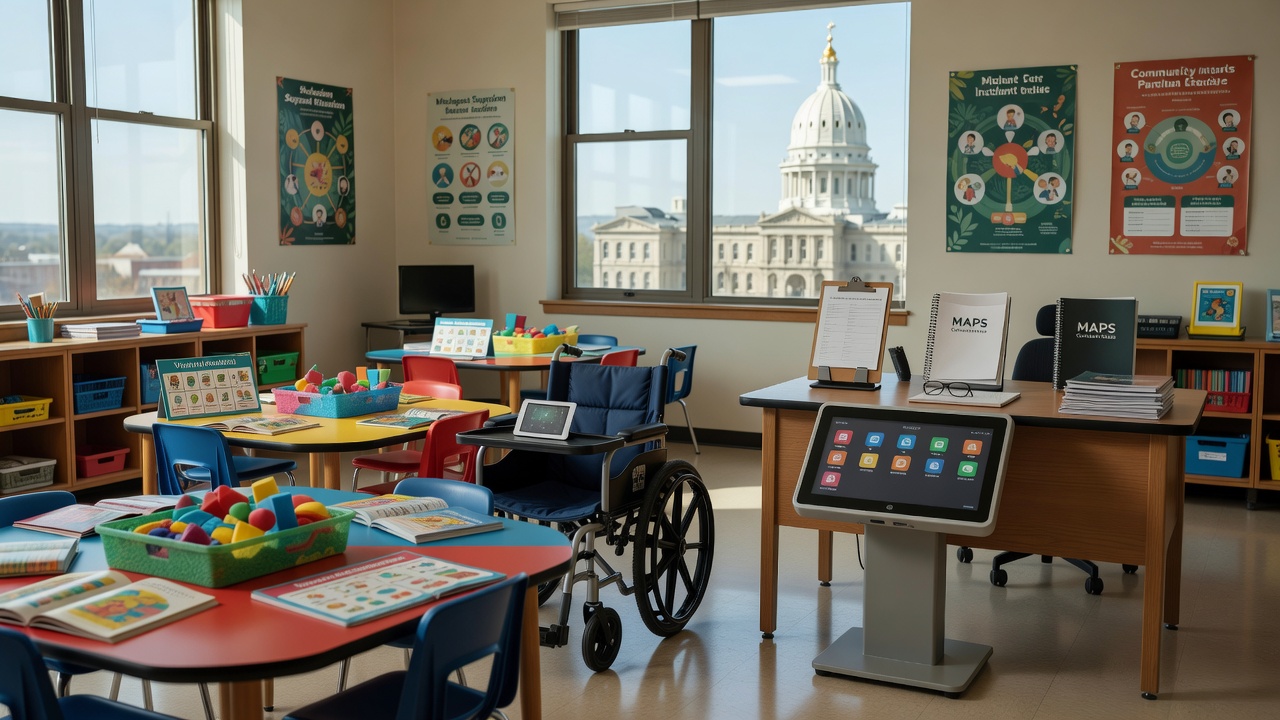
Michigan has launched a federally funded apprenticeship program allowing paraprofessionals, instructional assistants and substitute teachers to become certified special education teachers without leaving their jobs. The effort, called Michigan Apprenticeship Pathways for Special Education (MAPS), is backed by a five-year, $1,007,235 award from the U.S. Department of Education and brings together state agencies, Alma College and labor-sector partners.
How the Apprenticeship Works
Participants continue working in their local school districts while completing bachelor's degrees and certification coursework. Registered apprentices must complete 576 hours of related instruction alongside 8,000 hours of supervised, paid on-the-job training under certified special education teachers. The program covers out-of-pocket costs and lets participants keep their current wages and benefits, according to Krista Johnson, director of LEO Workforce Development at the Michigan Department of Labor and Economic Opportunity.
Addressing a Persistent Teacher Shortage
State officials describe the initiative as a direct response to Michigan's long-running shortage of certified special education teachers. Susan Corbin, director of LEO, said the program expands registered apprenticeship into a statewide earn-and-learn pathway into the profession. Dr. Glenn Maleyko, state superintendent of the Michigan Department of Education, said the approach targets two priorities simultaneously: improving services for students with disabilities and increasing the supply of teachers in a field facing critical shortages.
Building on an Existing College Model
MAPS expands Alma College's existing Paraeducator to Special Education Teacher program, known as Para to Pro, which combines online coursework with weekend in-person sessions. Dr. Peggy Yates, who chairs Alma College's education department and directs Para to Pro, said the format has proven popular with both paraeducators and school districts because it lets them keep working while studying. As group sponsor, Alma College will manage registration, compliance tracking and data reporting to ease administrative demands on school districts.
Scaling the Model Statewide
The Michigan AFL-CIO Workforce Development Institute plans to launch a second apprenticeship pathway using the same framework to test expansion across additional districts, according to executive director Chong-Anna Canfora. Dr. Katie Giardello of MiLEAP's Office of Higher Education said the goal is a pathway that is practical for participants and sustainable for the institutions involved. Over the five-year grant period, organizers aim to build lasting infrastructure, including standardized competencies, employer agreements, data systems and multiple program sponsors to support long-term growth.