
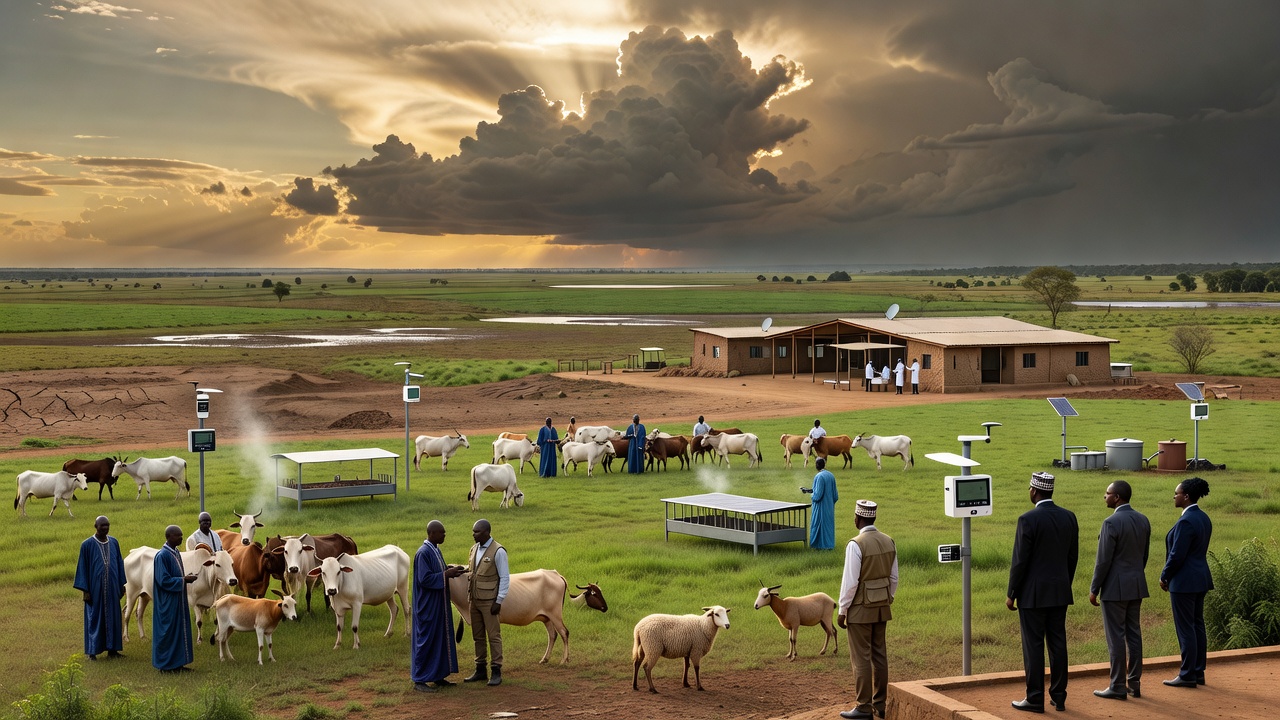
Nigeria has formally begun rolling out its Third Nationally Determined Contribution (NDC 3.0), with the livestock sector singled out for emissions reductions and climate resilience measures. The plan, unveiled Thursday alongside a new National Steering Committee, pairs an economy-wide 2035 emissions target with sector-specific programs for herders, ranchers and pastoral communities.
A Sector Under Climate Pressure
Minister of Livestock Development Idi Mukhtar Maiha said livestock underpins food security, jobs, poverty reduction and economic growth in Nigeria, but warned that rising temperatures, droughts, floods, water scarcity, pasture degradation and shifting disease patterns are threatening animal health and pastoral livelihoods. In response, his ministry has launched a Climate-Smart Implementation Plan under the National Livestock Growth Acceleration Strategy, targeting animal nutrition, feed efficiency, genetics, animal health, herd management and manure handling - measures intended to lower emissions while improving productivity and profitability.
Adaptation and Monitoring Measures
On the adaptation side, officials described work on sustainable water supply, fodder development and climate-resilient feed systems at selected grazing reserves and Livestock Development Centres, alongside disease surveillance, health infrastructure and early-warning systems. To strengthen data quality, the ministry is building a measurement, reporting, verification and certification system and conducting a methane baseline survey. Five digital weather stations have already been installed to monitor atmospheric pressure, wind speed, humidity and soil conditions, feeding into decisions on resource allocation.
National Targets and Financing Gap
Omotenioye Majekodunmi, Director-General of the National Council on Climate Change, said NDC 3.0 commits Nigeria to cutting emissions by 32 percent by 2035 against a 2018 baseline, on a trajectory toward net zero by 2060. She emphasized that the country must move "from ambition to delivery, from pledges to governance," calling for credible project pipelines and policy certainty to draw investment. Maiha acknowledged that government funding alone cannot finance the transformation, stressing that mobilizing private investment, technology and partnerships will be essential to implementation.
Linking Policy to Everyday Life
Representatives from the Secretary to the Government of the Federation's office and the UNDP underscored that the NDC should function as a development tool embedded in budgets and infrastructure planning, not a standalone document. UNDP Resident Representative Elsie Gyekyewaa Attafuah noted that most Nigerians experience climate change through concerns over harvests, flooding that disrupts schooling, and extreme heat affecting health and work - framing climate-resilient agriculture, clean energy and cleaner cooking as interventions with direct, tangible benefits for communities.