
Survey Finds Researchers in Poorer Nations Still Shut Out of Equal Publishing and Funding Access
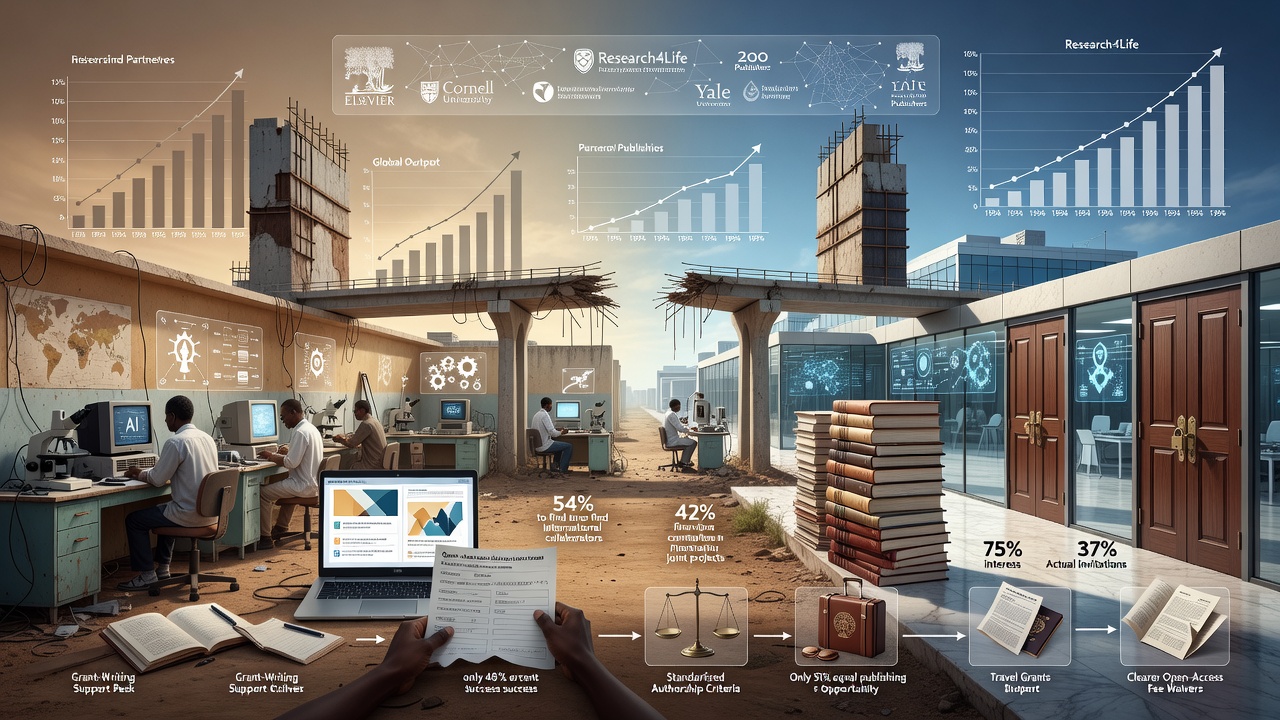
A new survey of 1,122 researchers in low- and middle-income countries finds that despite a quarter-century of growth in their global research output, structural barriers still limit their ability to secure funding, collaborate internationally and publish on equal footing with peers in wealthier nations. The report, released by the publisher Elsevier and the Research4Life partnership to mark the initiative's 25th anniversary, pairs survey data with interviews with more than 100 institutional research leaders and proposes ten recommendations for change.
Growth in output, persistent gaps in opportunity
Researchers based in low- and middle-income countries (LMICs) now account for more than half of the world's published research output, a sharp rise from just 13% in 1994, according to the report. Yet the survey found that only 51% of respondents feel they have equal opportunity to publish in international journals, and 24% reported an authorship-related issue, most commonly being given a lower authorship position than expected. Funding access remains uneven as well: 52% applied for funding in the past three years, but nearly half cited limited international support and partnerships as a barrier, with success rates lowest in low-income countries and Sub-Saharan Africa.
Collaboration is common, but hard to start
Fifty-nine percent of surveyed researchers took part in international collaboration over the last three years, suggesting strong global engagement. However, 54% identified finding suitable partners and connecting platforms as the top obstacles to initiating that work, and 42% said financial constraints posed the biggest challenge once collaboration was underway. The report also flags an emerging "AI divide," noting that institutional leaders want clearer guidance on responsible AI use and worry that researchers in wealthier countries using advanced AI tools could widen the gap further.
Open access costs and underused support
While 88% of respondents said publishing open access matters to them, 73% said article processing charges most influence which journal they choose, and only 48% have ever received a waiver or discount. Interest in peer review and editorial service is high - 87% want to review and 75% want to join an editorial board - but only 37% have actually been invited onto a board in the past five years. Awareness of Research4Life itself also lags: just 38% of researchers surveyed said they were familiar with the program, though 82% of those who knew it found it useful.
Recommendations and next steps
The report sets out proposed actions across seven areas, including expanding grant-writing support, clarifying open-access fee waivers, adopting standardized authorship criteria, building structured pathways into peer review and editorial roles, and offering travel or remote-participation support for conferences. Research4Life - a partnership involving five United Nations agencies, Cornell and Yale Universities, the International Association of Scientific, Technical and Medical Publishers, and more than 200 publishers - says the findings will shape its next strategic plan, with an emphasis on moving researchers in LMICs from basic access toward leadership roles in global research.