
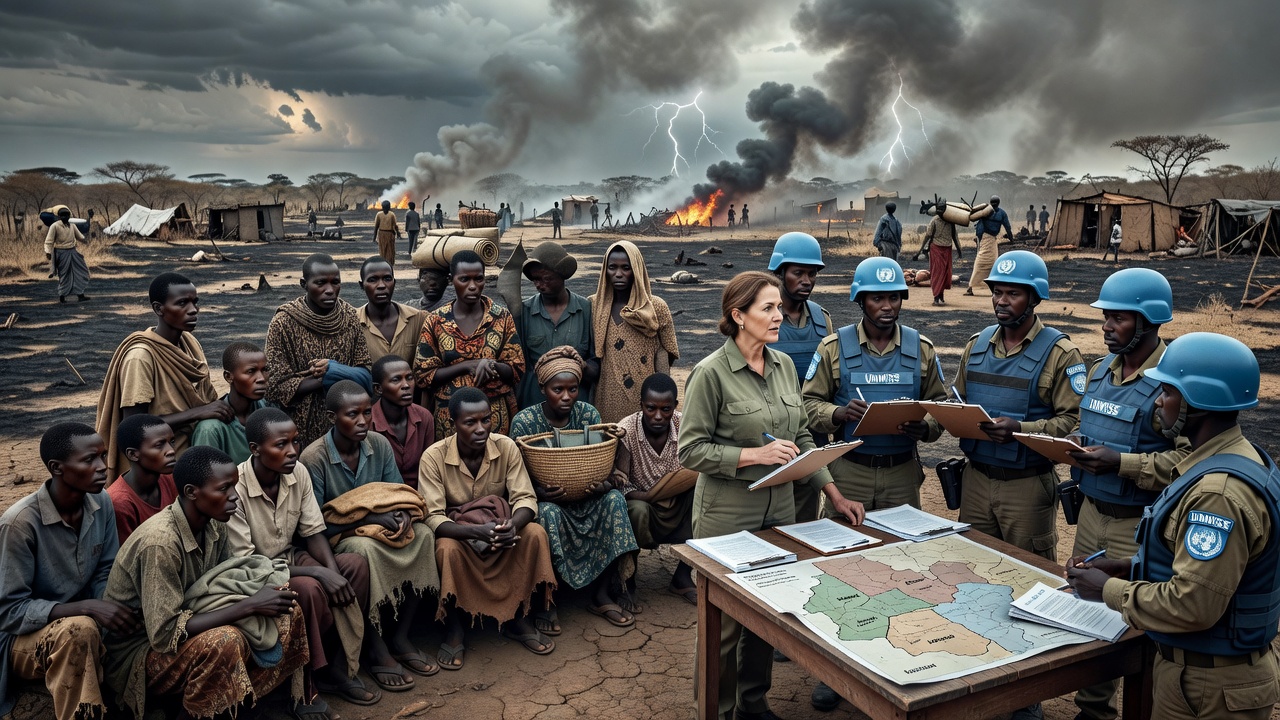
An interim report from the United Nations Mission in South Sudan (UNMISS), delivered to the UN Security Council, concludes that civilians suffered the heaviest toll during the country's fighting and were frequently targeted because of their ethnicity. The findings, drawn from more than 500 interviews with victims and witnesses, cover the period from December 15, 2013, through the end of January 2014.
What investigators found
UNMISS researchers documented what the report describes as gross human rights violations, including deliberate killings of civilians carried out along ethnic lines. The report also states that large numbers of people were forcibly displaced for similarly discriminatory reasons. Investigators concentrated their work on four states that experienced the most intense combat during this period: Central Equatoria, Jonglei, Unity, and Upper Nile.
Why the geographic focus matters
By narrowing the inquiry to these four states, UNMISS aimed to build a detailed, evidence-based picture of where violence was most severe rather than attempting a nationwide survey in this preliminary phase. The report is explicitly framed as interim, meaning it reflects findings gathered so far and may be followed by additional reporting as the mission continues its work.
Accountability as a policy priority
Hilde F. Johnson, the UN Secretary-General's Special Representative heading UNMISS, said accountability is essential for any national reconciliation process to succeed. "Without bringing to justice the perpetrators of these horrendous crimes, revenge and impunity is likely to lead to a perpetual cycle of violence," she said. The report frames prosecuting those responsible not merely as a human rights obligation but as a practical step toward addressing the root causes of South Sudan's crisis.
Context and limits of the findings
This report represents one stage of an ongoing UN human rights investigation rather than a final legal determination of responsibility. Identifying and prosecuting individual perpetrators typically requires further judicial processes beyond what a UN mission's reporting can establish on its own. Readers should understand the interim report as a documented account of patterns and testimony gathered to date, intended to inform international and domestic responses rather than to serve as a conclusive criminal verdict.