
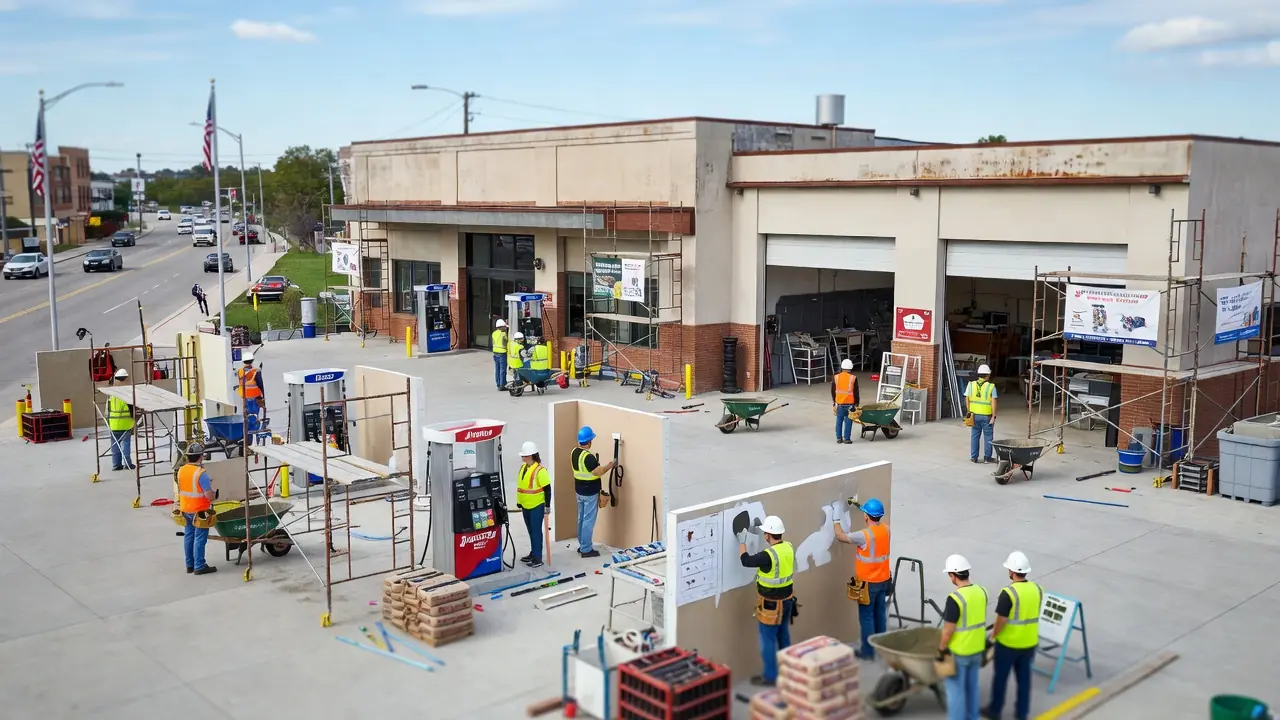
The City of Niagara Falls has sold the former Junior's Truck Stop property at 5647 Niagara Falls Boulevard, along with an adjacent building, to the local chapter of the Operative Plasterers' & Cement Masons' International Association. The union plans to use the site to run a pre-apprenticeship training program aimed at preparing newcomers for careers in the building trades.
What the Sale Enables
The property transfer gives the plasterers' union a dedicated physical space to train prospective workers before they formally enter an apprenticeship. Pre-apprenticeship programs typically combine basic safety instruction, hands-on skill-building and orientation to union processes, helping participants qualify for apprenticeship slots that lead to journey-level trade careers. Converting a former commercial truck stop into a training facility also represents a practical reuse of vacant property in the Niagara Falls Boulevard corridor.
A Broader Goal Across Trades
According to the union, the intent extends beyond plastering and cement work alone. Organizers describe a goal of establishing a permanent, shared pre-apprenticeship program that could eventually serve workers interested in multiple building trades, not just the plasterers' and cement masons' local. Details on timing, enrollment criteria, funding sources and which additional trade unions might participate have not been specified in available reporting.
Why Pre-Apprenticeship Access Matters
For job seekers without prior construction experience, pre-apprenticeship programs can serve as a practical entry point into skilled trades that typically require formal apprenticeships for advancement. These programs are commonly used nationwide to widen access to construction careers, including for workers transitioning from other industries. As with any training program, prospective participants should confirm eligibility requirements, program length and any costs directly with the sponsoring union local once the Niagara Falls site becomes operational.
Context in the Local Economy
The sale is one of several developments noted in a recent regional business roundup, which also mentioned retail and community news in the Buffalo-Niagara area. Public property sales for workforce training use reflect a broader pattern in which municipalities repurpose underused commercial sites to support local employment pipelines, though the specific economic impact of this particular facility will depend on how quickly the training program scales up and how many trades eventually use the space.